

When the immovable mind moves
After one loss too many, I lost my sense of fudōshin.

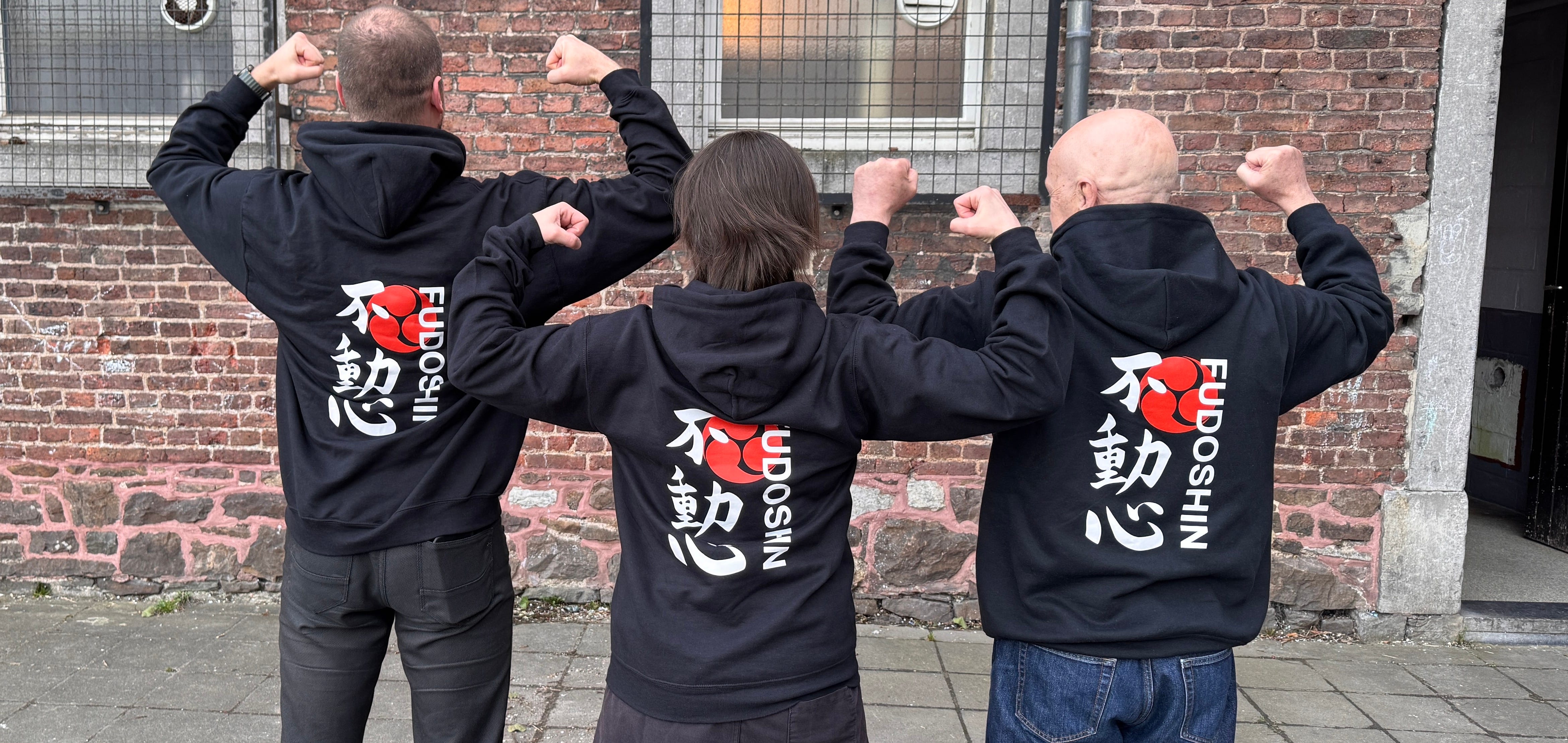
[Thank you 🫶 Danny Deam from Fudoshin Goshindo Gendai Budo for the wonderful hoodie!]
You think you handle the tough stuff in life well, until, some random Thursday evening at the boxing gym, you notice that you have totally had enough for today and your eyes start searching for the clock on the wall only to find out that you are merely 17 minutes in and training hasn’t really started yet.
You are surprised, because it feels like you have been here for ages. Maybe something is wrong with the clock. Not you, for sure, there is nothing wrong with you. Can’t be. You love boxing, you love the gym, you love being here. But somehow for the rest of the two-hour session your eyes keep wandering back to that clock – with an annoying precision of every… single… minute… And with every glance, time is getting stickier and yuckier like an old chewing gum, stretching into a painful never-ending nothing. You start feeling trapped inside the gym, as if your life is supposed to happen somewhere else. Despite the fact this is the exact place that you longed to be all that time. It was this exact here-and-now that you missed so much, when you couldn’t go.
Towards the end of the training session, it’s finally your turn to step into the ring for a quick three-times-two-minutes sparring session with the only other woman present that day: a former national team boxer turned coach, who ever so gently puts you on the ropes. Which is okay, you’ve been there before. She does it lightly in the beginning, but increasingly precisely as the minutes go by.
And then it happens: you flinch. You can’t even remember when you flinched last. But now, you flinch at almost every single one of her punches, up to the point where you can hardly keep your eyes open, you duck away, hope for this to end soon, because there isn’t a single punch you get out yourself, except some half-hearted air strikes that make your light-footed opponent smirk: “I’ll be catching a cold if you keep throwing air at my face.” And then she does what is expected of a former world-class boxer: she follows through with her attack to finish you off. You keep your eyes completely closed now, both gloves pressed to your forehead to protect at least your face, until you hear yourself saying with an almost crying voice long before the bell: “enough, you win”. She steps back, shrugs her shoulders “there is no winning in sparring” and hops out of the ring.
You know that. But you still feel you lost. You lost your shit in the ring.
Back on the floor, you don’t listen to the witty comments and neither do you talk, because that deeper breath, that talking would require, might set off tears. You already made enough of a fool of yourself today.
You walk home in the cold air of an early spring night, looking at the outside world, as if you have been released from prison after decades. It’s not until you reach the bus stop when you realize you missed a valuable boxing lesson here, you could have learned so much from her, but… you didn’t. Shocked, you turn around, you want to go back immediately and redo the session once again. Every step and punch. Redo the whole thing. All of it! The whole final week at the bedside of your dying dad, because that was the most right-place-at-the-right-time you’ve ever known. Redo every single painful second of it, all the opportunities you were given, to ask him yet another question, to hold him, make him feel loved one more time and make sure once again that he knows he’s done it right. Just one more time.
And that’s when you finally start crying, at first about how you weren’t present in the ring today and then about how you feel you weren’t present when your dad died, despite the fact that you held his hand. Finally, you cry about your broken spirit, scattered into little pieces, floating in space, moving further apart as you try to catch them to put them back together.
I never thought I would experience something within the normal life I have that exceeds my capacity to hold myself together. Even now, every time I try to fit the many things that unfolded over the past year, with all their weight and texture, into a few sentences of explanation, it sounds weirdly overdramatic. None of it is anything that you and I haven’t experienced before. But it’s not so much what happened, but rather the fact that basically all of it happened in such a short span and I didn’t really process one thing before the next happened. And a lot of it also happened to the people I love, which is a different kind of heartbreak on top of your own broken heart. And in all this clustered grief, standing at this bus stop, I came to realize that I am far from being as immovable in crisis as I once experienced myself to be.
And that makes all the words I am trying to write down here feel even more off, because they simply don’t match the person I think I am… or, I thought I was. A person who would never simply lose her shit, who stayed calm amidst the biggest chaos, who owned her fudōshin. Until I lost it.
Fudōshin, often translated as “immovable mind,” is a core concept in Japanese martial arts that reflects a state of inner stability, like emotional composure and mental clarity, even in the face of chaos and threat. It’s a deep-rooted presence that remains steady regardless of external pressures. The capacity to stay connected to yourself no matter what. A vivid union of stillness and responsiveness, calmness without passiveness, aliveness without being reactive, awareness without being guided by fear, anger, or ego. It has both philosophical and practical weight: in combat, it allows you to read the situation without panic; in life, it invites you to hold your ground without aggression. It’s the most sustainable answer to the question of how not to lose yourself.
In our leadership seminars, when we introduced the idea of fudōshin, most of the participants hoped to learn how to stay strong in order to “throw the better punches” at their workplace, which for them meant to have wittier answers or sharper arguments than their opponent. They confused “not losing yourself” with winning, or often even mistook it for an exercise in dominance. But when you are in a dominant, winning position, there is almost no need for a well-cultivated fudōshin.
In Aikido we generally assume we are in the weaker position to start with, assuming that the attacker is ahead of us, having all the adrenaline and aggression flooding their body already, or just because, well, there always is a bigger bear. We simply can’t always be in the winning position. But that doesn’t mean we have to lose ourselves at the same time. That’s why on the mat we practice noticing the moments when we’re pulled off-center, when stress hijacks our movement, or ego tightens our muscles. We practice returning to the breath after losing it, keeping moving through fatigue and frustration without collapsing into it.
This isn’t easy, it takes a certain presence and honest self-confrontation, but after a while, you’ll notice how the pauses grow between actions and reactions and how you do not need to win every exchange right away. Meditation helps. Holding your ground calmly in a difficult conversation is a useful practice. And regular sparring with someone more advanced than you can be a great teacher.
While fudōshin clearly is a skill and a practice, it can also be part of your personality and identity. Whether you were born with it or trained your brain for it, fudōshin involves parts of the brain that also shape how you experience yourself.
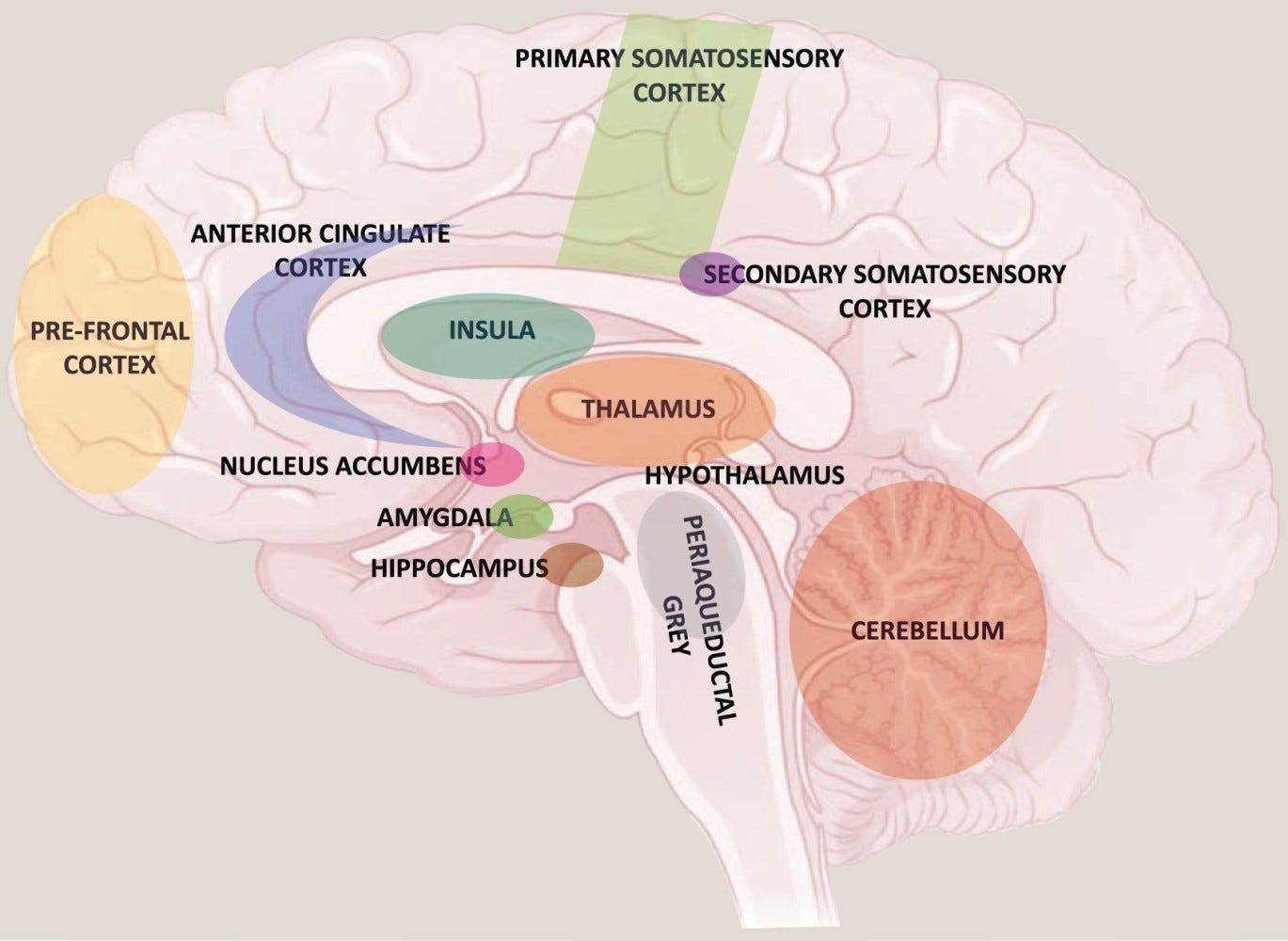
There’s the relationship between the prefrontal cortex and the amygdala. The amygdala is our brain’s scanner and messenger for danger or significance, the part that makes your heart jump when you suddenly hear a loud noise or feel judged in a social situation. The prefrontal cortex, on the other hand, is the part involved in planning, reasoning, daydreaming, but also self-control, like when you stop yourself from reacting impulsively in an argument and instead choose your words carefully. In a state resembling fudōshin, the prefrontal cortex doesn’t shut down the amygdala, but it keeps it in check.
The anterior cingulate cortex and the insula cortex are involved, too. While the anterior cingulate cortex can be understood as a bridge between emotional and cognitive areas and helps you notice when something is off, like realizing you made a mistake or that your mind is drifting, the insula tracks internal sensations, such as your heartbeat or tension in your chest. When an unexpected attack puts you in a stressed and reactive mental state, these closely connected systems can pull your attention around, almost as if they were hijacking each other, and let discomfort dominate your awareness. In a more stable mental state, the different functions of your brain still register what’s happening and raise your awareness, but without dragging your focus away from what you’re doing.
It also involves the large-scale brain networks and how they interact - especially the default mode network and the task-positive network. The default mode network is active when you’re thinking about yourself, when you’re replaying the past or worrying about the future. It’s also active when you get lost in overthinking. Task-positive networks are active when you’re fully engaged in something, like solving a math problem or reacting in a fast-paced, high-demand situation. In many people, stress pushes them too far into one mode, either overthinking or rigid focus. A more balanced brain can shift fluidly, allowing calm awareness even while acting.
And there is a more bodily side to fudōshin, too, involving the autonomic nervous system with its two main modes: the sympathetic side (sometimes called the fight & flight mode, but that’s too simple), which prepares us for action, and the parasympathetic side (which would be the rest & digest mode), which calms us down. Someone with a calm mind tends to shift smoothly between the two, rather than getting stuck in prolonged stress. You might feel the surge of adrenaline in a tense moment, but it doesn’t spiral.
Training our fudōshin is less about adding a new ability, like more control, but more about removing what keeps destabilizing us in the first place. As we are strengthening our self-regulation, we are gradually weakening habits such as immediate overreaction or getting lost in our thoughts. This can become a self-reinforcing loop: the more we train a calm mind, the less distraction occurs within us that even needs controlling. As a consequence, our system becomes even quieter and more balanced on its own.
And beneath the immovable mind an even deeper level evolves that touches our identity: how we experience our own thoughts and sense of self. Because at any moment, our sense of self is built from signals like bodily tension, emotional tone, and where our attention rests, and as those signals stabilize over time, the way we perceive ourselves stabilizes with them.
Calm. That’s me. That’s my sense of self.
But grief doesn’t negotiate with that. It doesn’t respect genetics or training, nor the deep commitment that you have made it your thing to always calmly stand your ground. It simply rearranges the ground itself to the degree that suddenly you have nothing to stand on.
So I have been wondering, what if this whole idea only works as long as life doesn’t hit too hard, too fast? Is fudōshin a matter of conditions? While my life was relatively integrated, with no clustered crisis flooding the system, fudōshin appeared to me like a personal quality. Like, this is who I am. But when those conditions collapsed, it became obvious how much of my immovable mind wasn’t something I held, but something that I was allowed by a certain internal and external balance. Because until then, there was no real gap between what was happening and my capacity to meet it. I simply wasn’t being pulled to opposite sides in the same moment, and nothing inside me was arguing with reality. I didn’t flinch in a long time, because I felt no need to escape yet another impact of life.
But now, a part of me was strongly refusing any contact with life, while another part insisted on being even more present, because this is what life really is. Like, when I wanted nothing else but to be with my family and next to my dad in his last weeks, because that’s the most alive thing one can do, but also not wanting to accept that this was actually happening.
Which makes me wonder if I misunderstood the depth of fudōshin the whole time, because something that only exists when nothing really shakes you isn’t immovable, it’s just undisturbed!
I don’t know, but one thing is for sure: my immovable mind is not something I will be able to return to. It’s something that I will have to rediscover in a different form, one that includes this capacity to let it go. And something else I will have to do, is taking it out of the realm of duty. Stop making fudōshin something I owe to myself or others. Because that’s a heavy place to stand when you’re grieving. It ends up making you useless by your own standards.
There must be a version of fudōshin that includes the moment when the practice is not to hold my ground, but to lose it honestly. Where I yell “enough” before the bell, as an honest boundary drawn by my system that knows its limits. Because if fudōshin is “not being at odds with reality,” would “pretending to be steady when I am shattered” not actually be a violation of it?
I’m not trying to redefine fudōshin into something soft or vague. If anything, I’m saying it might be more demanding than I thought it was. Something more like a state of alignment that comes and goes. Sometimes available, sometimes not.
So, what does fudōshin look like when you simply cannot be composed any longer?
I don’t have an answer.
Update / P.S.: I just realized that I had published the article “Not the final draft” exactly a year earlier, reflecting similar ideas - but from a very different inner place. Reading it now, and encountering thoughts I am certain I wasn’t consciously aware of back then, makes me realize how little I understand about my own writing.
I’m Lena. I write about movement, Aikido, boxing, embodiment and the quiet disasters that make me better at it. There may be sword metaphors. And pancake metaphors. Or the devastating absence of both. If you want to support my writing, leave a ❤️ or a comment for reach.
Thank you for sharing this deeply personal piece. And my condolences for your loss.
Fudõshin might need different things from you in different stages of your life to uphold or attain. Being stable and staying stable are not the same as being able to just perform under (massive) pressure. I personally believe it is a state of self that comes with being at peace with yourself.
I’d posit that Fudoshin is not the absence of emotion and it seems to me that you avoided your emotions as to not face this terribly sad situation.
Grief kicks you in the gut and will return to do so several times. More frequently at first and then less. But it doesn’t go away.
Hang in there. Rooting for ya. My deepest condolences, even though I never met you.
May your father rest in peace.